

“This show is particularly interesting as it does not seek to JUST entertain, but to
provoke.”
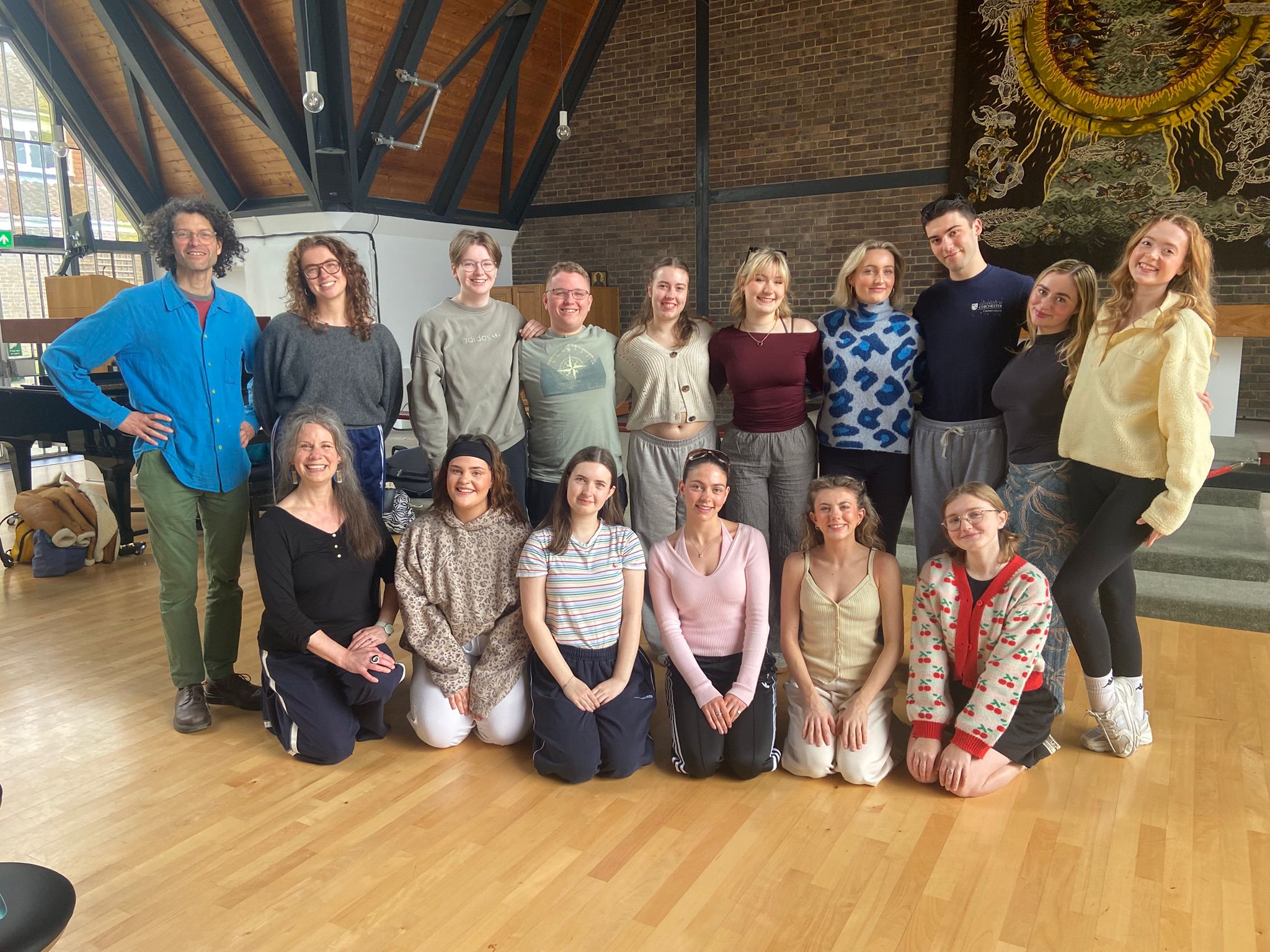
As part of BYMT’s 2026 Season we spent two days with first and third year Musical Theatre students from Chichester University developing new musical How (Not) To Save The World, written by duo Isabella Waldron (Writer & Co-Lyricist) and Ben Glasstone (Composer & Co-Lyricist).
How (Not) To Save The World:
The government has had enough of trying to solve the nation’s problems. Their solution? Outsource it. They hire an “elite” squad of supposed experts: The Headquarters for Effective Legal and Patriotic United Solutions (HELPUS). But even HELPUS is out of ideas… until they land on one last, desperate plan.
When they arrived at the university, Ben and Isabella had been working on a first draft of the piece; they were keen to develop their ideas with the creativity and lived experience of the students, to inform the plot and characters further. Creative Director of BYMT, Emily Gray, joined the duo as Director.
Trying to develop a whole musical concept within two days is no mean feat. When asked how they managed to fit so much into that time, Emily explained how she, Isabella, and Ben went into the space with a clear structure and set goals, which they’d shared with the students, so they were all able to work to a joint aim.
The two days focused on development of the characters within the piece. Ben and Isabella invited the students to expand on the template of characters within the story and then improvise with the script and see what the outcomes were. This resulted in the characters being shaped by the personalities of the young people who helped to fully invent them.
The story has a blend of contemporary and nostalgic themes and situates itself within an almost alternative reality, where issues of today such as AI are key themes; however, the atmosphere of the camp resembles an 90s all American summer camp, akin to that of 1998 film The Parent Trap, allowing for the opportunity to play across time periods. The theme of AI struck a chord with the students as its usage is a rising concern amongst younger generations due to its environmental and societal impact. Using the story to explore the young people’s feelings towards AI allowed them to safely express their frustrations through the characters they were playing, resulting in authentic exploration.
Third year student Cerys reflected on the process:
“As an actor, it’s rare to be involved in the creation of something like this and is very refreshing to be able to use our creative minds in a different way to support the industry!
It is incredibly important for new musicals to explore contemporary topics to keep this industry moving forward. The vessel of entertainment allows the real issues of our society to reach much wider audiences… This show is particularly interesting as it does not seek to JUST entertain, but to provoke.”
When discussing the relevance of the themes, first year student, Malwina said:
“Workshopping this musical really brought my attention to how dangerous AI will get soon if we don’t do anything to stop it. I now feel more aware of how detrimental AI is to the planet we live on and to the arts.”
Other themes present in the story include the division of generations and underestimating the youth of today’s awareness of their surroundings. Development with students is therefore crucial to the accuracy of these characters in the story, as is typical of any BYMT musical. As an organisation we value the thoughts and opinions of our young people and they actively inform our development process for new work.
On the importance of new musicals, first year Gracie said:
“New musicals are so important as they allow for playwrights and song artists to showcase their material and get their names out in the world. It also allows for more modern issues to be showcased in the media to help raise awareness or push for change.
During this process, I have learnt exactly what goes into creating a new musical. I have also learnt the importance of improvisation when it comes to devising new pieces and generating ideas.”
In keeping with the immersive energy of the room, the days finished with the group all sitting in a ‘campfire’ circle, where they offered insight into the journey arc of their characters. Ben was softly strumming on his guitar, and by the end of the circle had written a song based on what was said by the group. This was a conclusive and fitting end to the development days.
Ben and Isabella spoke of their experience fondly:
“We had an inspiring couple of days working with the students at Chichester Conservatoire. The young people seemed to relish the opportunity to be involved in the development of the story and characters at such an early stage. They were wonderfully willing to go on a journey with us and help generate all kinds of scenarios to try out. It was fascinating to see how over the course of just two days we all started to identify certain performers with certain roles: the impressions of those performers will be left on the characters as they develop further through the next stages of our work.
Some of the young people’s takes on the characters, relationships and themes in the piece gave us unexpected food for thought and we were able to push further on this and ask them in-depth questions about, including their feelings about Artificial Intelligence, which will strongly inform the piece going forward. We are hugely grateful to the students for their commitment and creativity and were impressed at how much of a boost we gained from just two days with them. We are now in a much stronger position to work towards a complete first draft over the coming months – and, we hope, a first production next year!”